
Last updated November 4, 2026
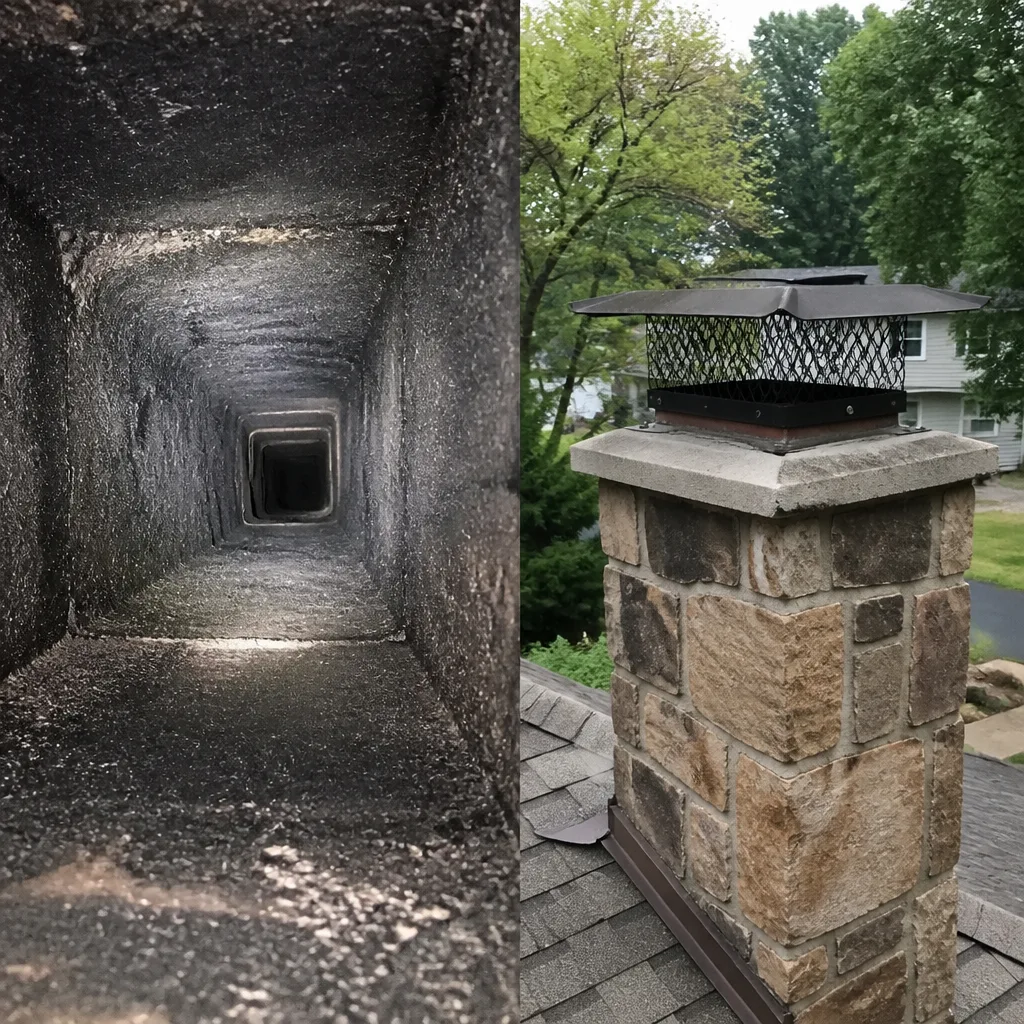 Sweep & inspection
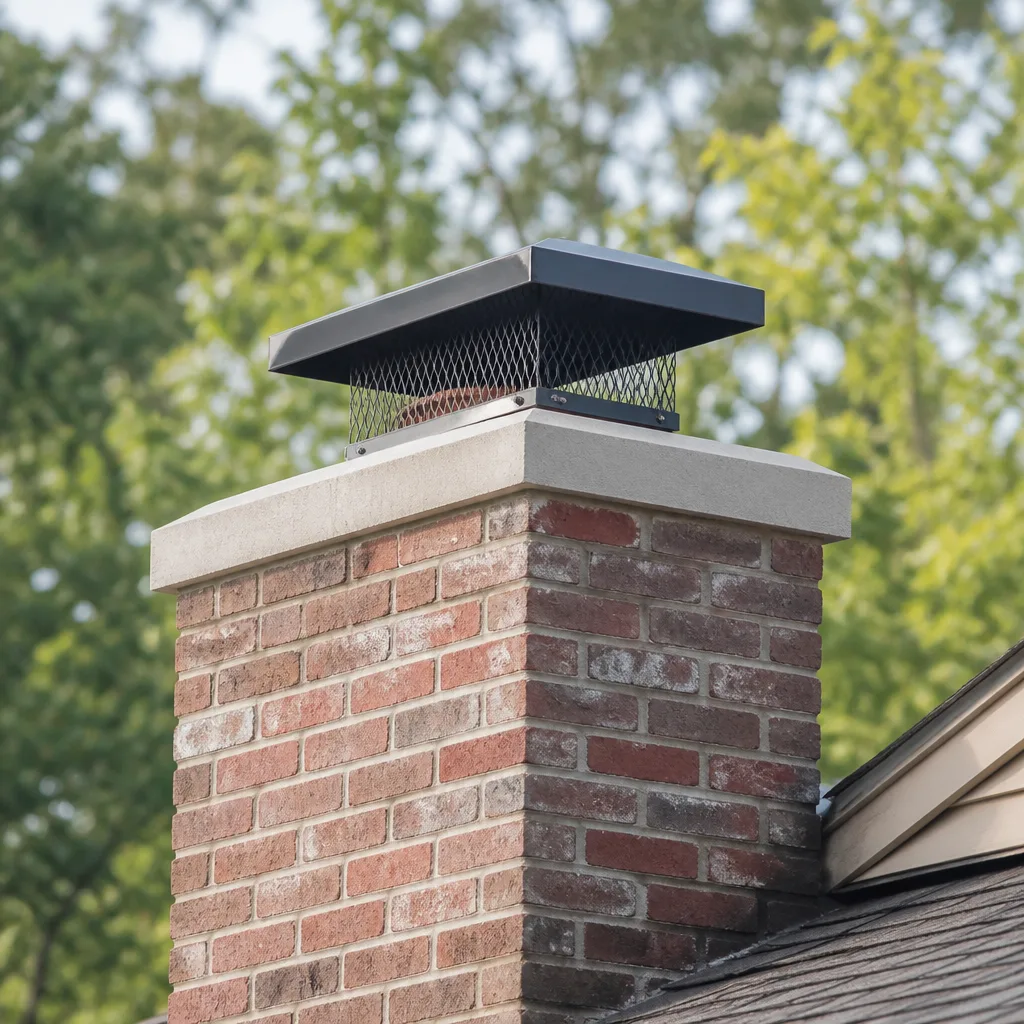 Caps & crowns
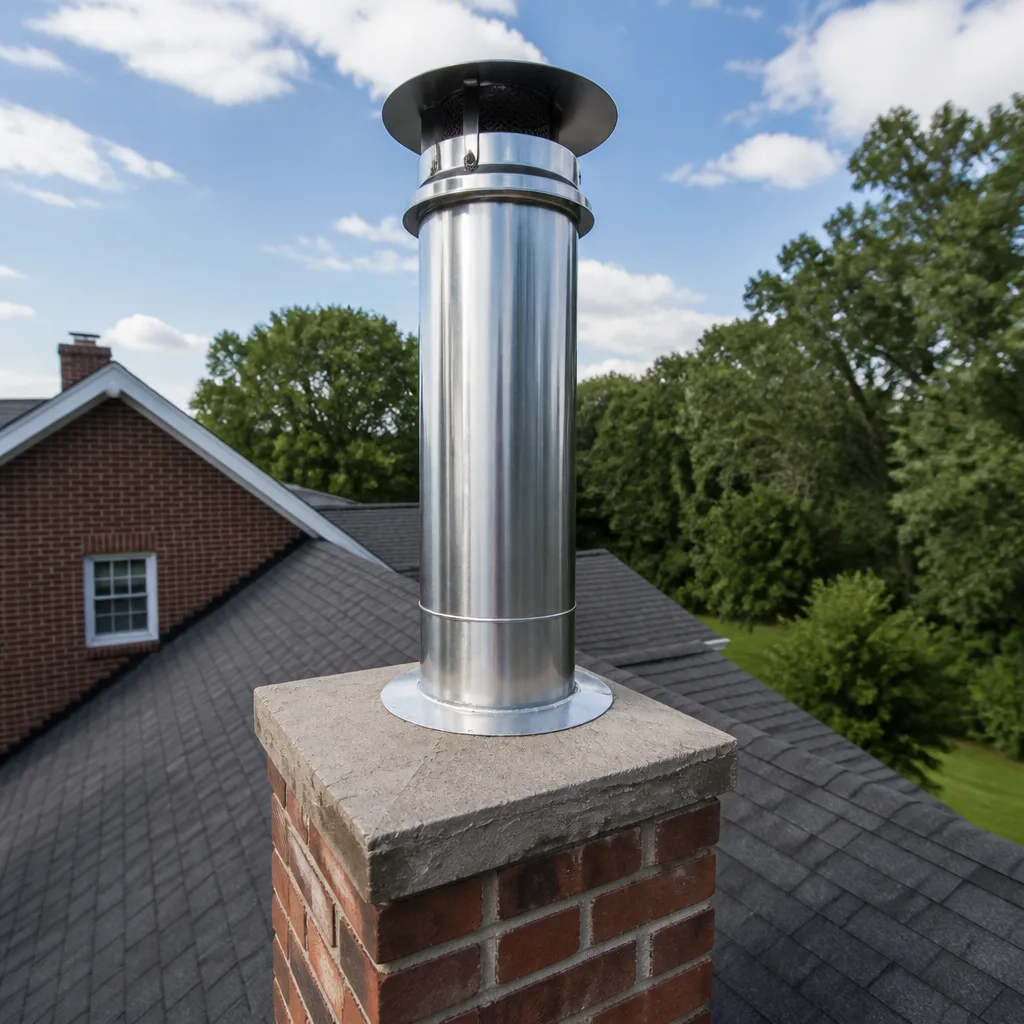 Flue relining
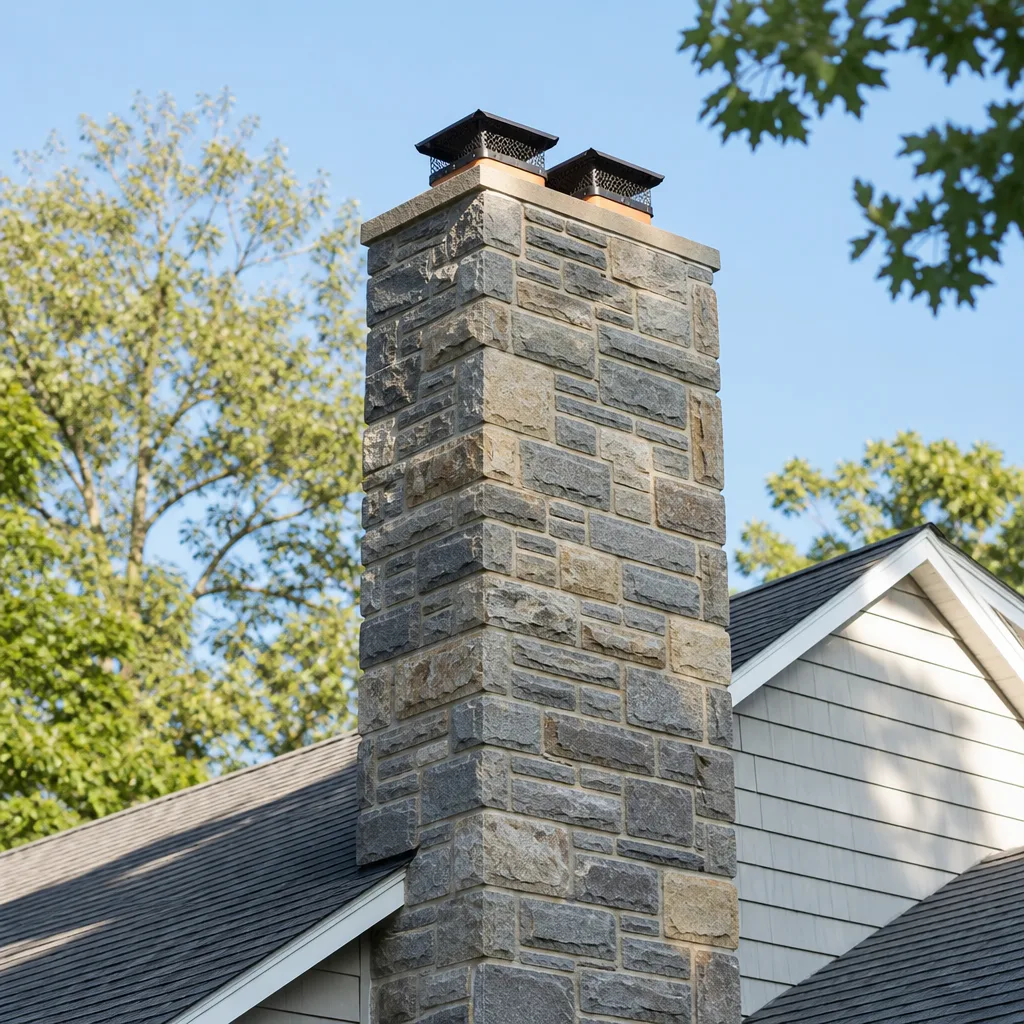 Masonry repair
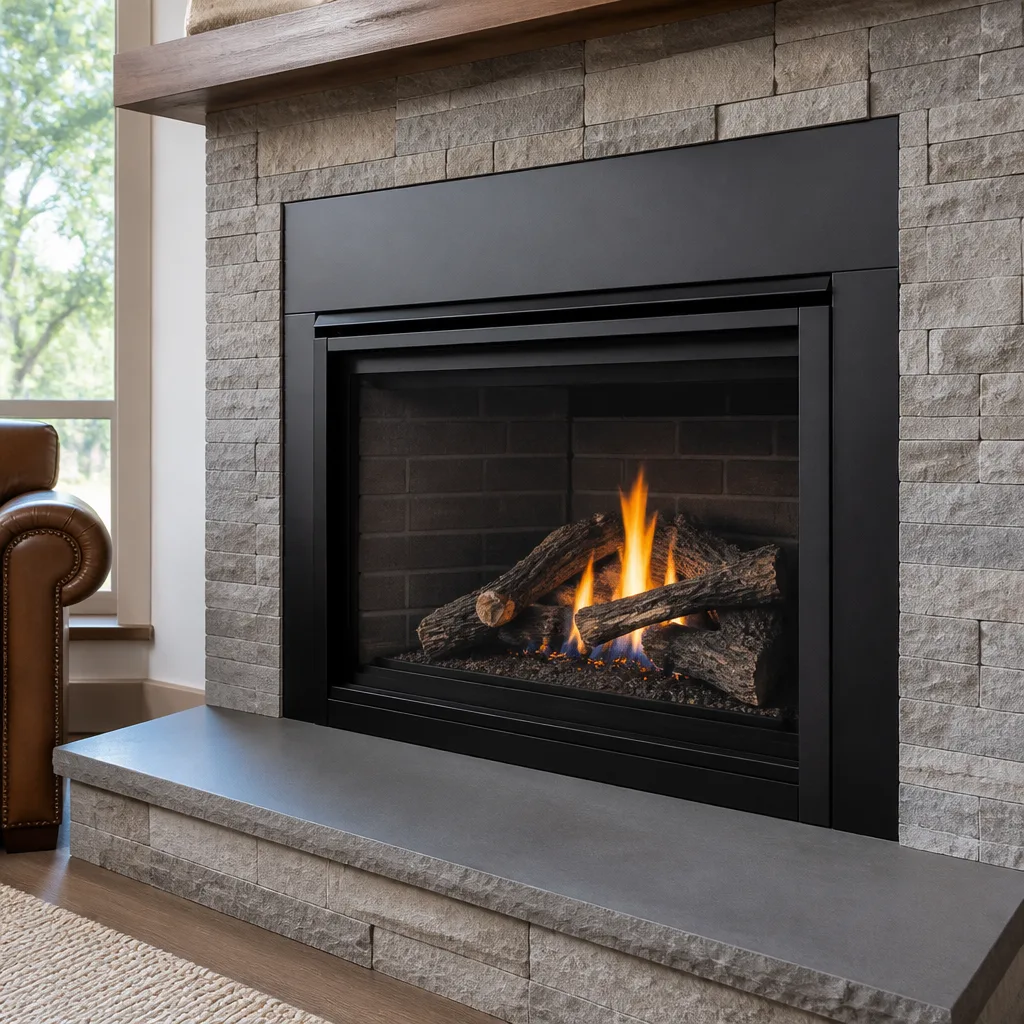 Gas fireplace service
Level 1 sweep and inspection to the NFPA 211 annual standard - flue, crown, cap, and flashing checked and photographed
Chimney sweep logs do not sweep chimneys. They loosen some creosote - which then falls where a brush and vacuum still have to collect it.
DIY vs Professional Chimney Cleaning: The San Leandro Homeowner’s Decision Guide
You can sweep your own flue on a Sunday morning, stand back, and feel good about the thin layer of soot you just removed, while a Stage 2 creosote glaze sits higher up the flue like hardened tar. That glaze is a fire waiting for the right conditions, and no amount of brushing from the firebox will touch it. This guide maps exactly where a homeowner’s reach ends and a technician’s equipment begins, so you can decide with your eyes open. San Leandro homes have their own rhythm: wood stoves that get used lightly most winters, gas fireplaces that run all season without visible wear, and occasional cold snaps that push a chimney harder than it has been pushed in years. By the end, you’ll know precisely what you can do yourself, what it actually costs, and what you’re paying for when you hire someone with a camera and a repair truck.
Quick Answer
Most San Leandro homeowners can handle a superficial cleaning of the firebox and the first few feet of flue, but a proper chimney cleaning requires tools, roof access, and inspection equipment that makes the professional route the safer and often cheaper choice once you factor in the real cost of doing it correctly. The decision hinges less on sweeping and more on what the sweep lets you see: a standard professional visit includes a camera inspection of the entire flue, which is how you catch cracked liners, deteriorating mortar, and creosote glaze before they become a fire or a five-figure repair. If you own a brush and a ladder and you clean the chimney every year, DIY can keep a clean system clean, but if you haven’t had a pro look at it in years, the first visit is the one that matters most.
Styles & brands we work with
- Sweep & inspection
- Caps & crowns
- Flue relining
- Masonry repair
- Gas fireplace service
Table of Contents
- What You Can Actually Access From Inside the Firebox
- The Real Cost of Doing DIY Correctly vs Hiring a Pro
- What Professionals See That a DIY Sweep Cannot
- What DIY Means for Your Fire Insurance Claim
- When a Professional Visit Pays for Itself Immediately
- Safety: The Part Every DIY Guide Skips
- San Leandro-Specific Factors: Climate, Codes, and Chimney Age
- Common Mistakes to Avoid
- When to Call a Professional
- Frequently Asked Questions
What You Can Actually Access From Inside the Firebox
Here is the boundary that determines everything else: from inside your living room, kneeling at the fireplace opening, you can see roughly two to four feet up the flue. That is where the damper sits, and past it the flue darkens and angles away. Everything above that point, the entire vertical run of the chimney through your house and out the roof, is invisible to you without a ladder and a mirror, and sometimes even with them.
What you can reasonably do from the firebox:
- Remove loose ash and soot from the firebox floor and the smoke shelf if you can reach it with a vacuum and a flexible hose.
- Check the damper for rust, warping, or a broken handle, which you can operate and feel by hand.
- Shine a bright light up the flue and look for obvious blockages: a bird nest, a fallen brick, a dead animal. You will only see the first few feet, but some blockages start that low.
- Inspect the firebrick lining the firebox for cracks, spalling, or missing mortar joints, which are visible without any special equipment.
What you cannot do from the firebox is the actual chimney sweep. A chimney brush works by running the full length of the flue, scrubbing creosote off the walls from top to bottom. To do that, you either work from the roof downward, which means getting on the roof with the right brush size and rod sections, or you work from inside with a rotary system and a drill, which still requires you to know the exact flue dimensions and to reach the entire height. Most San Leandro chimneys run 15 to 25 feet from firebox to crown. That is not a distance you can cover with an arm and a hardware-store brush.
The flue liner is another blind spot. Older San Leandro homes, particularly the bungalows and mid-century builds throughout the city, often have original clay tile liners. A tile liner can crack from heat stress or a chimney fire and look perfectly intact from below. Without a camera dropped down the flue, you simply cannot know. That is the limit in a nutshell: DIY access covers the firebox and the lower damper area, and professional access covers everything from the smoke chamber to the cap.
The Real Cost of Doing DIY Correctly vs Hiring a Pro
The DIY pitch usually sounds like this: a professional chimney sweep costs a few hundred dollars, while a brush from the hardware store costs forty. But that comparison only holds if you already own a ladder tall enough for a two-story roof, a respirator that filters fine particulate, a drop cloth system that keeps soot out of your living room, and a vacuum with a HEPA filter that can handle fine ash without blowing it back into the house. Most people own exactly one of those things.
An honest DIY setup for San Leandro looks like this:
- A chimney brush with the correct diameter for your flue, plus enough flexible rods to run the full height: $50 to $120 depending on the flue size and rod count.
- A roof ladder or extension ladder with a standoff if you’re working from above, or a rotary cleaning system if you’re working from below: $150 to $400 for the ladder, $80 to $200 for a basic rotary kit.
- A proper respirator with P100 filters, safety glasses, and gloves: $40 to $80.
- A HEPA-rated shop vacuum with a fine-dust filter bag, or a dedicated ash vacuum: $100 to $300.
- Drop cloths, plastic sheeting, and a tarp for the roof area: $25 to $50.
- A chimney inspection camera or a flexible scope with a light, so you can see what you cleaned: $50 to $200 for a basic model.
The realistic total for a first-time DIYer who owns none of the equipment lands between $400 and $950. For a professional sweep and inspection in San Leandro, you’re typically looking at a similar range, and the professional shows up with commercial-grade equipment, a camera, the right brush for your specific flue, and insurance that covers the work. On a cost-only basis, DIY only wins if you already own the infrastructure or if you plan to clean the chimney yourself every year and amortize the tools over a decade. And even then, you’re still flying blind on the inspection side.
What Professionals See That a DIY Sweep Cannot
The value of a professional visit is not the brushing. It is the camera. When we run a camera down a flue, we’re looking at the entire liner surface, the smoke chamber, the damper assembly, and the top of the chimney in one pass. Here is what actually shows up that you will never see from the living room:
- Cracked or spalled clay tile liners. A hairline crack in a liner is invisible from below, but it lets heat and gases reach the surrounding masonry, which is how chimney fires spread into the house structure. This is common in San Leandro’s older housing stock where tile liners have been through decades of heat cycles.
- Stage 2 and Stage 3 creosote. First-stage creosote is a fluffy soot that brushes off easily. Stage 2 is a glaze, a tar-like coating that hardens and requires chemical treatments or rotary chains to remove. Stage 3 is a hardened, shiny deposit that often requires professional-grade remediation. You cannot tell which stage you have from the firebox floor.
- Smoke chamber deterioration. The smoke chamber sits between the damper and the flue, and in many San Leandro chimneys it was built with corbeled brick and mortar that erodes over time. Deteriorated mortar in the smoke chamber creates pockets where creosote and debris collect, and it cannot be seen or safely cleaned without professional access.
- Cap and crown condition. The concrete crown at the top of the chimney and the metal cap that covers the flue are the first line of defense against rain. Cracks in the crown or a missing cap let water into the masonry, which is how you get rusted dampers, damaged liners, and stained ceilings below the chimney chase. All of that is invisible from the ground and from the firebox.
- Partial blockages. A bird nest or a mass of leaves may sit 10 feet down the flue, out of sight from the top and the bottom. It compresses instead of clearing when you brush over it from the roof, and it can still partially block the draft. A camera finds it immediately.
This is where the repair capability matters. A lot of chimney services only know how to sweep. When their camera finds a crack, they hand you a report and suggest you call someone else. Chimney Cleaning San Leandro carries repair capacity on the same truck that does the sweeping. We stock and install professional-grade chimney components including Gelco caps, Olympia Chimney liners, and Copperfield chase covers, which means the diagnosis and the fix happen in the same conversation, not across a chain of phone calls. That is the difference between a sweep service and a full-system contractor.
What DIY Means for Your Fire Insurance Claim
This is the question most DIY chimney guides never touch, and it is the one that matters when something goes wrong. If a chimney fire damages your home and the fire investigation points to creosote buildup as the cause, your insurance company will ask for maintenance records. What “maintenance” means in that context is documentation of professional cleaning and inspection. A homeowner saying “I swept it myself” is an unverifiable claim, and insurance adjusters treat unverifiable claims with the skepticism they deserve.
This is not legal advice, and every policy is different. But the pattern is consistent: policies that exclude or reduce coverage for damage caused by neglect define neglect partly through the absence of professional maintenance. If you have been cleaning your own chimney for a decade, you may believe the system is maintained, but you have no record that would satisfy an adjuster. A professional sweep comes with a dated report, often including photos from the camera, and that document is what you hand over when the claim comes.
There is also the liability side of DIY work. If you are on your roof with a brush and a rod, and you damage the crown, crack a tile, or fall and injure yourself, that is on you. Professional chimney work carries its own insurance for the technician and the property, and in the rare event something does get damaged during a service visit, the company’s coverage applies. San Leandro homeowners who do their own work on steep roof pitches or two-story chimneys are taking on a risk that has nothing to do with creosote.
The practical takeaway: if you’ve never had a professional chimney sweep and inspection, your fire insurance safety net may have a hole in it the size of your flue.
When a Professional Visit Pays for Itself Immediately
There are specific circumstances where the first professional visit to a San Leandro home reveals problems that have been accumulating for years. In those cases, the cost of the sweep is trivial compared to what it prevents. Here are the scenarios we see most often:
- You just bought the house. A home inspector may have flagged the chimney as “needs further evaluation” or simply noted “chimney present, condition unknown.” That is not an inspection. A camera scope is an inspection, and it tells you whether the previous owners maintained the system or just used it.
- You’ve been burning wood for years without a professional cleaning. Creosote accumulation is a function of burn cycles and wood quality, not time alone. A chimney that has seen three or four seasons of softwood fires can have a glaze layer even if the firebox looks clean.
- You switched from a gas fireplace back to wood. The first wood fire in a chimney that has only run gas for years can be a shock to the system. Gas produces water vapor and mild acidity, and a liner that handles gas fine may be compromised for wood. Get the camera before you get the firewood.
- You notice a smell, a draft change, or water staining near the chimney chase. These are symptoms, not causes. A smell usually means creosote or a dead animal. A draft change usually means a partial blockage or a damper problem. Water staining means the crown or cap has failed. All three are one-visit diagnoses with a camera.
- You had a chimney fire and it went out on its own. A chimney fire that self-extinguishes still subjects the liner to extreme heat. Clay tile liners often crack during these events, and the crack is only visible via camera. Skipping the post-fire inspection is how you have a second, worse fire.
In every one of these situations, the professional visit is not an optional expense. It is the cheapest step in a sequence that gets dramatically more expensive if you skip it.
Safety: The Part Every DIY Guide Skips
The honest version of chimney DIY is that the dangerous part is not the fire, it is the roof. San Leandro homes include ranches with low slopes and two-story homes with steep pitches, and both present hazards that have nothing to do with your skill level. A hose reel, a backpack leaf blower, a chimney brush: none of these are designed for roof work, and gravity does not negotiate.
The second danger is what you are cleaning. Creosote is a combustible byproduct of wood smoke, and it clings to the flue walls in varying concentrations. When you run a brush through a dirty flue, fine particulate becomes airborne inside the chimney, and without proper containment below, it settles into the living room. That dust is not just messy. It is the same material you were trying to remove from a fire risk, reintroduced to your carpet and furniture where a spark from the fireplace can find it. Proper containment, negative pressure, and a HEPA vacuum are what separates a professional cleaning from a homeowner with a brush. Without them, you are performing a cosmetic ritual, not a safety procedure.
For the parts of a DIY cleaning that involve the damper, the smoke shelf, and the lower flue: work with the power off, wear a respirator rated for fine particulates, and never put your head directly into the firebox while running a vacuum without eye protection. Creosote dust in the eyes is a chemical burn. Use a headlamp, not a flashlight held in your teeth. And if you have any doubt about the structural condition of the chimney, the roof, or the flue, bring in a professional rather than finding out on a ladder.
San Leandro-Specific Factors: Climate, Codes, and Chimney Age
San Leandro has a climate that is gentler on chimneys than almost any comparison city you can name. Mild winters mean fewer thermal cycles and less stress on the masonry. There is no freeze-thaw cycle to pry tiles apart, no snow load pressing on the crown, and no months-long idle period where animals move in while the fire is cold all winter. This is, in chimney terms, an easy environment.
That same mildness creates a maintenance gap in the other direction. Because winters are short and the fireplace sees light use, San Leandro homeowners go longer between cleanings by default. The thinking is reasonable, up to a point: if the chimney is barely used, why clean it every year? The answer is that creosote does not care how often you use the fire, only whether the fire was hot and whether the wood was seasoned. Light use with occasional fires of convenience-store wood or damp branches from the yard produces more creosote than heavy use with properly seasoned hardwood. A chimney that gets 20 fires a year of mediocre wood is often dirtier than one that gets 60 fires of good wood.
The housing stock in San Leandro also skews older across much of the city, with many chimneys that were constructed with clay tile liners and traditional mortar construction from the mid-20th century. These systems work, but they were built in an era before stainless steel liners were standard, and the tile is often the original material. A camera inspection of a San Leandro chimney of that vintage is the only way to know whether the tile is still doing its job. In our experience, it usually is, right up until it isn’t, and the moment of “isn’t” is invisible from inside the house.
Building codes in California require that any liner modification or replacement meet current standards, and that a chimney serving a wood-burning appliance be cleaned and inspected as maintenance, not as an option. The code does not mandate a specific cleaning interval; the National Fire Protection Association says chimneys should be inspected at least once a year and cleaned as needed, and that standard applies to San Leandro as much as to any city with colder winters. Even in a mild climate, the annual rhythm matters because it catches what the mild weather lets you forget.
Common Mistakes to Avoid
- Brushing from the bottom without a sealed system and calling it done. You’ll move soot around, but you won’t reach the upper flue, and what you loosen will coat the living room. A half-cleaned chimney is not a clean chimney, and it gives you the false security of having done the maintenance.
- Using a wire brush on a clay tile liner with unknown condition. A wire brush can catch on a cracked tile edge and widen the crack, or dislodge a loose tile entirely. If you don’t know the liner condition, a wire brush is the wrong tool.
- Burning “cleaning logs” or chemical creosote removers as a substitute for sweeping. These products can loosen first-stage creosote in some situations, but they do not remove glaze, and they do not clean the flue. They are a supplement to professional cleaning at best, and a false substitute at worst.
- Ignoring the dryer vent while focused on the chimney. San Leandro homes running gas or electric dryers have the same fire risk in the laundry room as the fireplace. Dryer vent cleaning is a fire hazard issue, not a chore, and lint buildup in a vent can ignite just as thoroughly as creosote in a flue.
- Assuming the home inspector checked the chimney. Most home inspectors note the chimney as a “further evaluation” item. The actual flue inspection requires a camera and a scope, and it rarely happens during a standard pre-purchase inspection in San Leandro or anywhere else.
- Waiting until the smell arrives. A chimney that smells is usually months past needing attention. Waiting for a symptom is how you convert a $300 sweep into a liner replacement.
- Doing roof work without a second person on the ground. Even low-slope roofs have edges, and a fall from a one-story roof is enough to end a career, a season, or worse. If you’re going on the roof, someone needs to be home and aware.
When to Call a Professional
The short version: call when the work moves above the firebox, when you need a record for insurance, or when you need to know the actual condition of the liner. A DIY sweep can handle a clean chimney that just needs the maintenance rhythm maintained. It cannot diagnose a cracked tile, a deteriorating smoke chamber, a failed crown, or a partial blockage, and those are precisely the conditions that cause fires and expensive repairs. If you’ve been cleaning your own chimney for years and you’ve never had a camera in the flue, now is the time to see what you’ve been maintaining. Chimney Cleaning San Leandro offers free estimates in San Leandro. Call (833) 736-8208. We answer 24/7. Fast dispatch from 7am to 7pm, Sunday through Friday.
Frequently Asked Questions
A professional chimney sweep and camera inspection in San Leandro typically falls in the same broad range as a complete DIY equipment setup, with most homeowners paying a few hundred dollars depending on the flue size, the level of creosote, and whether any repairs are identified. The written estimate sets the final price, and the estimate itself is free. Call (833) 736-8208 for an exact quote.
You can clean the firebox and lower flue from inside the house using a rotary brush system and a drill, which is the method many professionals use when roof access is unsafe or impractical. What you cannot do from inside is inspect the upper flue, the smoke chamber, the crown, or the cap, which is why a professional camera inspection is still worth scheduling even if you handle the brushing yourself.
Chimneys should be inspected at least once a year and cleaned as needed, per the National Fire Protection Association standard, and San Leandro’s mild winters do not reduce that frequency because creosote accumulation depends on fire temperature and wood quality rather than climate severity. Light use with poor wood can create more buildup than heavy use with seasoned hardwood.
Most insurance policies define chimney maintenance through documentation, and a professional sweep report with camera photos is the standard evidence that a claim for chimney fire damage will require. DIY cleaning is unverifiable, and if a fire investigator cites creosote buildup as the cause, the absence of professional records can become the absence of coverage.
A sweep removes creosote and debris from the flue, while an inspection assesses the structural condition of the entire system, including the liner, smoke chamber, damper, crown, and cap. The two are usually performed together, and a sweep without a camera inspection is only half the job because the fire risks that matter most are structural, not surface-level.
We repair what we find. Chimney Cleaning San Leandro provides chimney sweep service, chimney repair, and dryer vent cleaning, with professional-grade materials including Gelco caps, Olympia Chimney liners, and Copperfield chase covers on hand for the repair side of the diagnosis. The camera identifies the problem, and the fix happens in the same visit rather than through a chain of subcontractors.
The Bottom Line
The DIY versus professional chimney cleaning question in San Leandro comes down to what you can see, not what you can brush. From inside the firebox, you can maintain a system that is already clean. You cannot diagnose a system that is not. The tools required for a proper DIY sweep cost about as much as a professional visit the first time around, and they still don’t include a camera, a repair capability, or an insurance-valid record. If you’ve been maintaining your own chimney for years, the single highest-value thing you can do this season is to pay for one professional camera inspection and see what the flue actually looks like. From there, the decision makes itself.
Written by the team at Chimney Cleaning San Leandro, serving San Leandro since 2013.
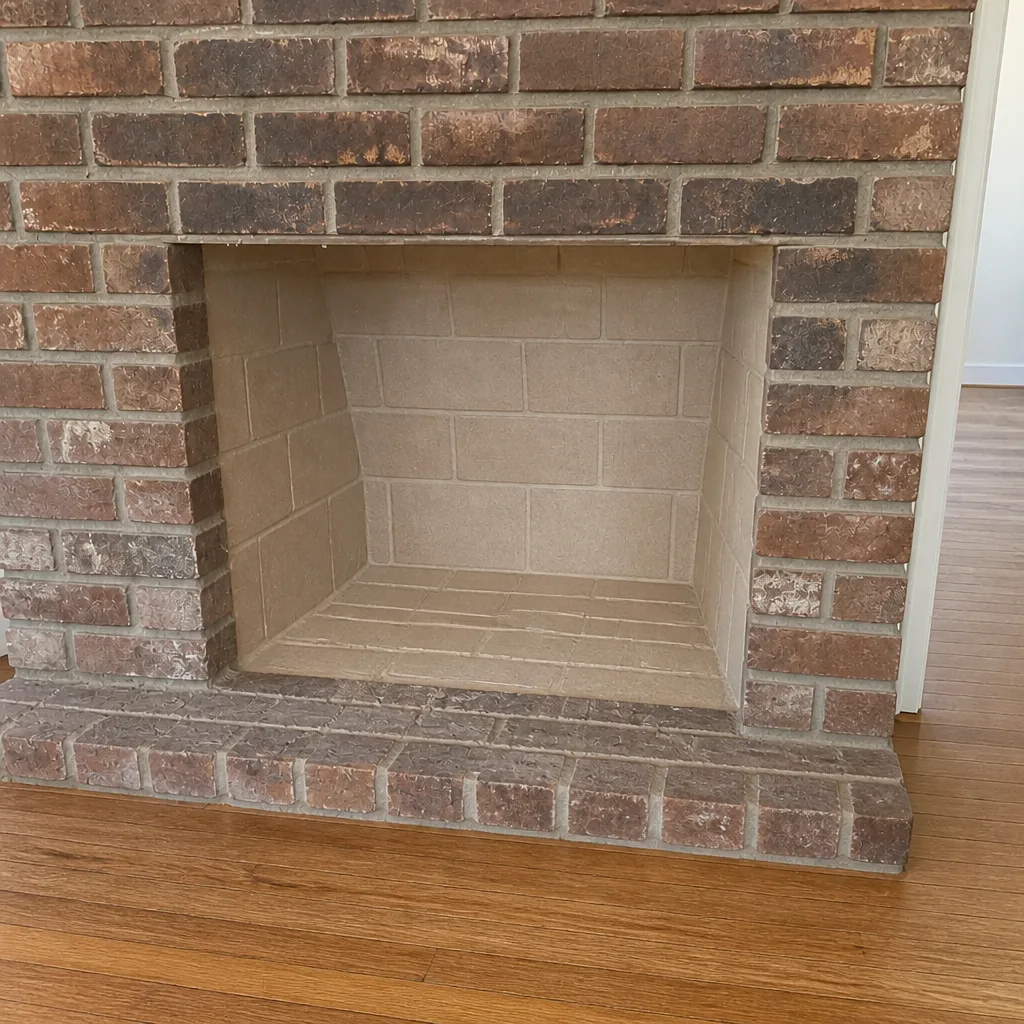
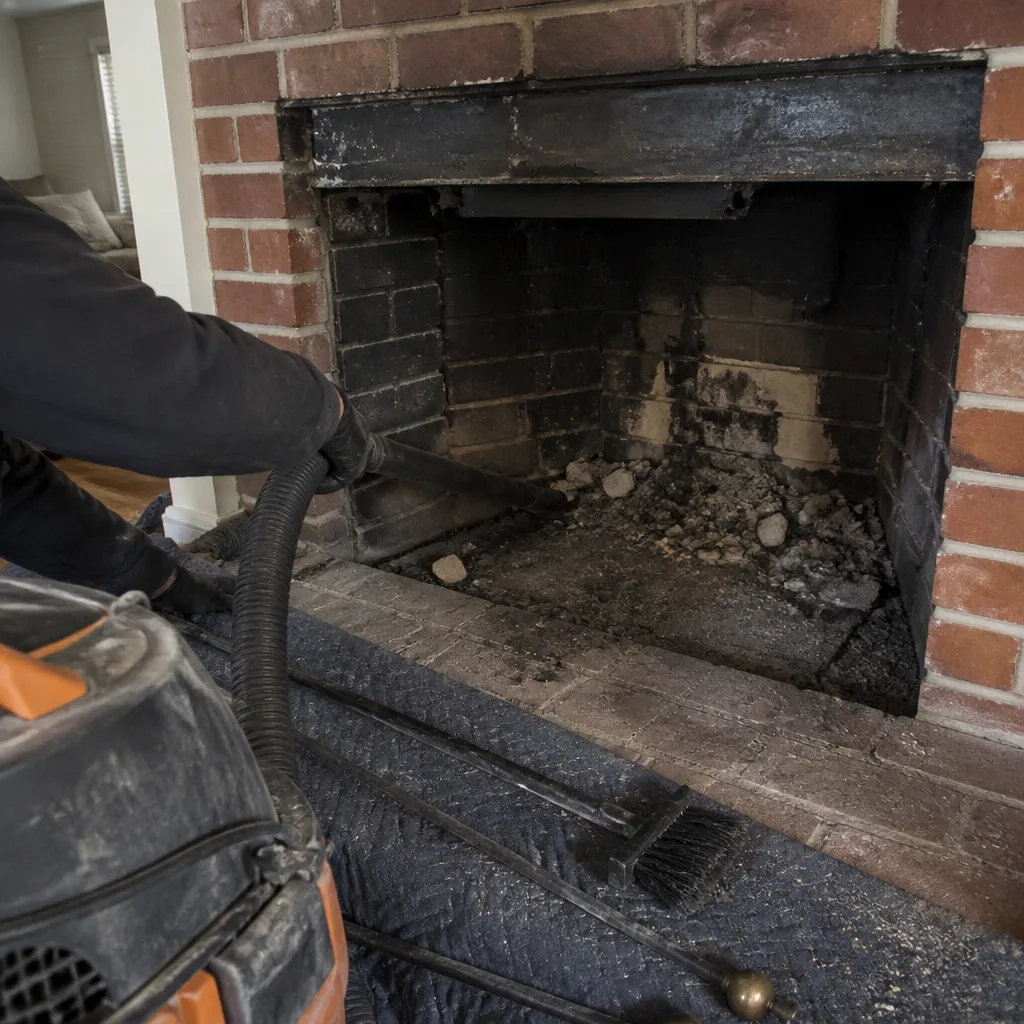
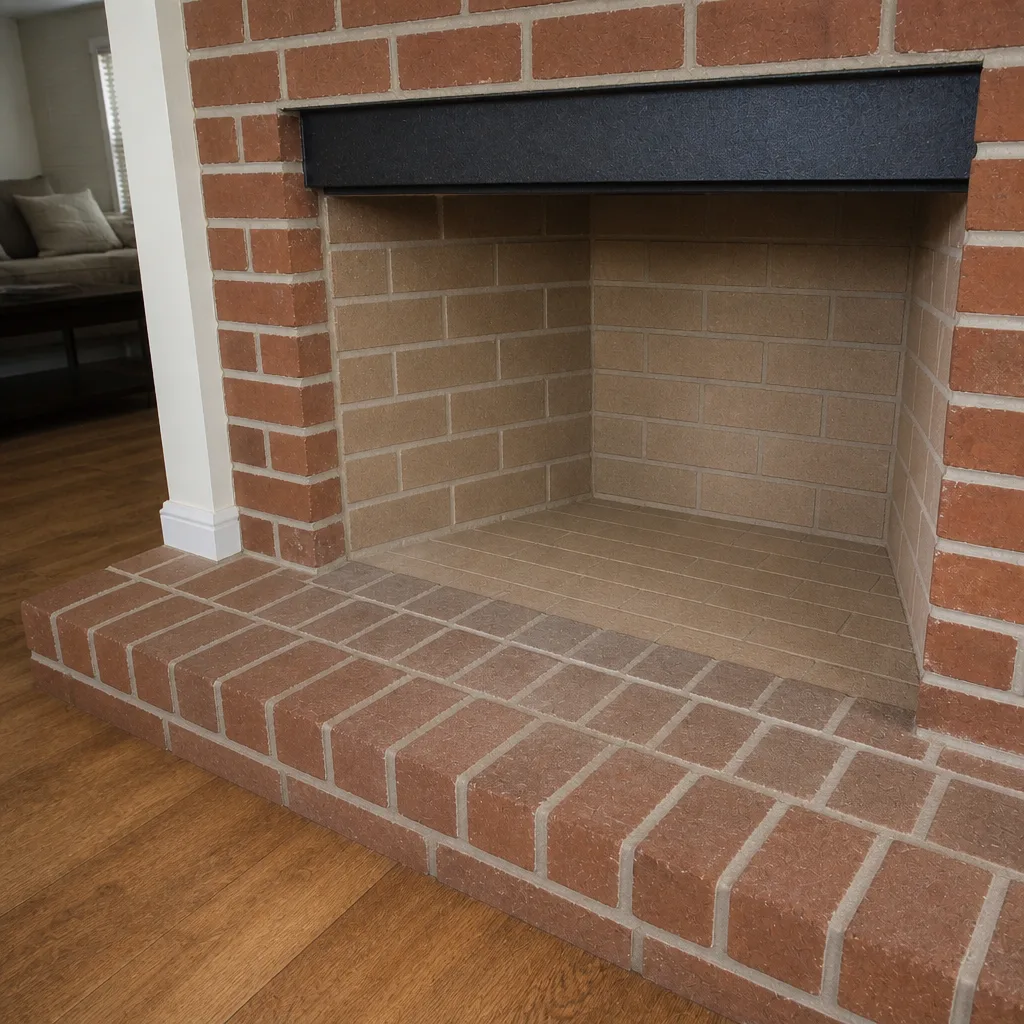
See the difference
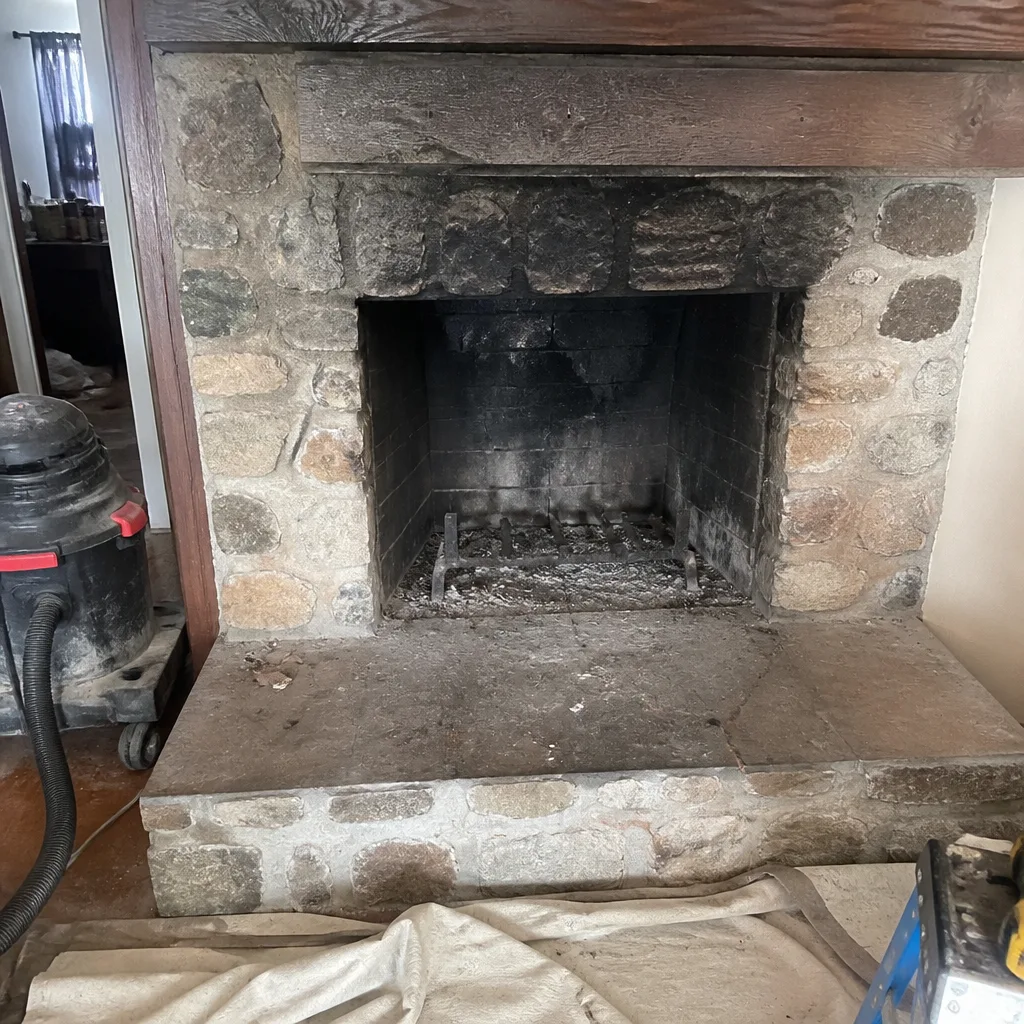 Before
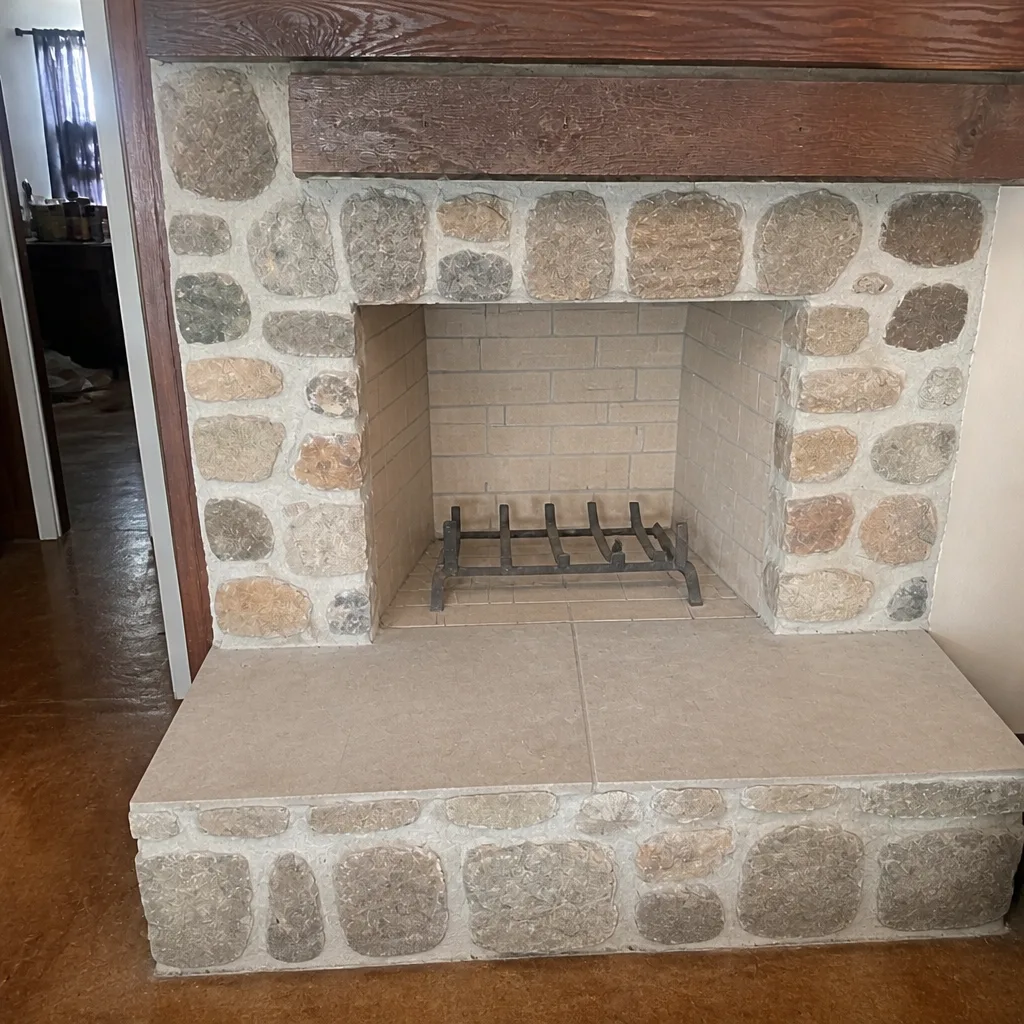 After
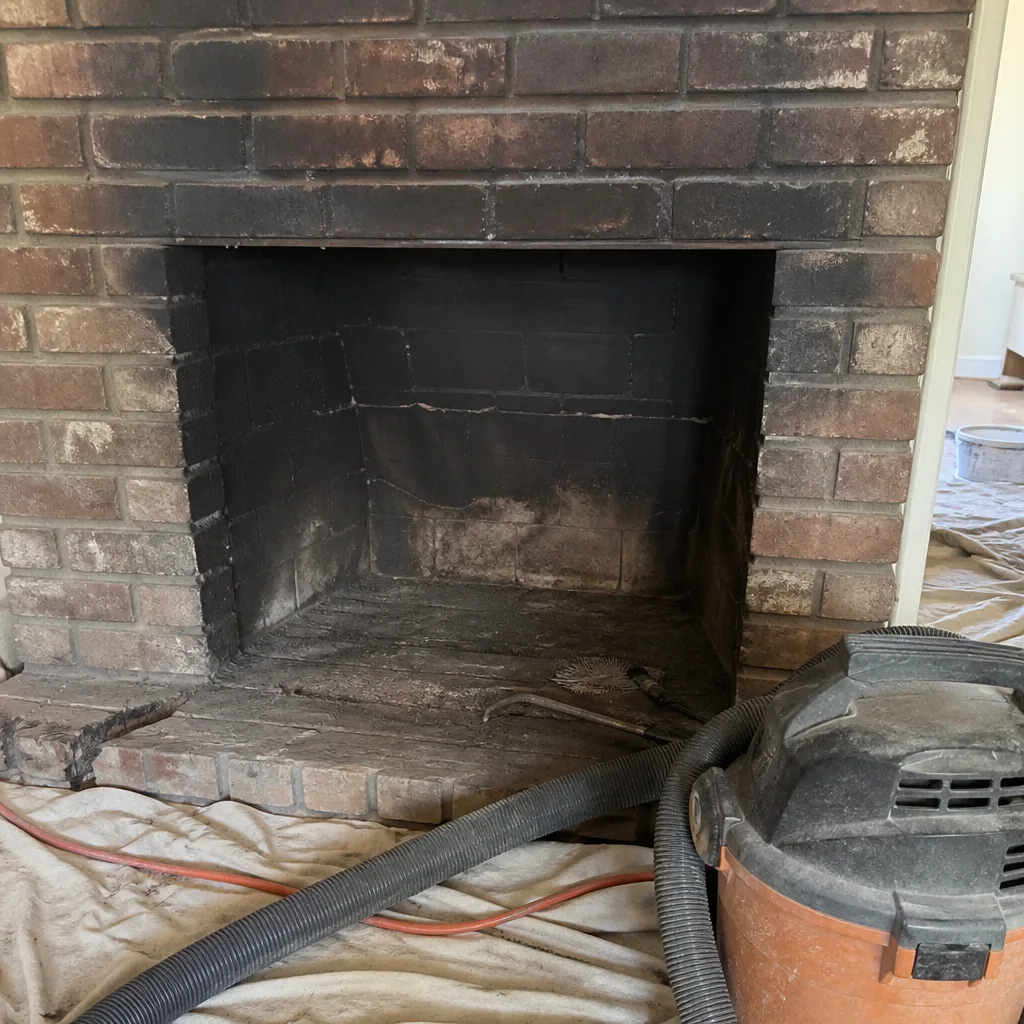 Before
 After
 Before
 After