
Last updated November 4, 2026
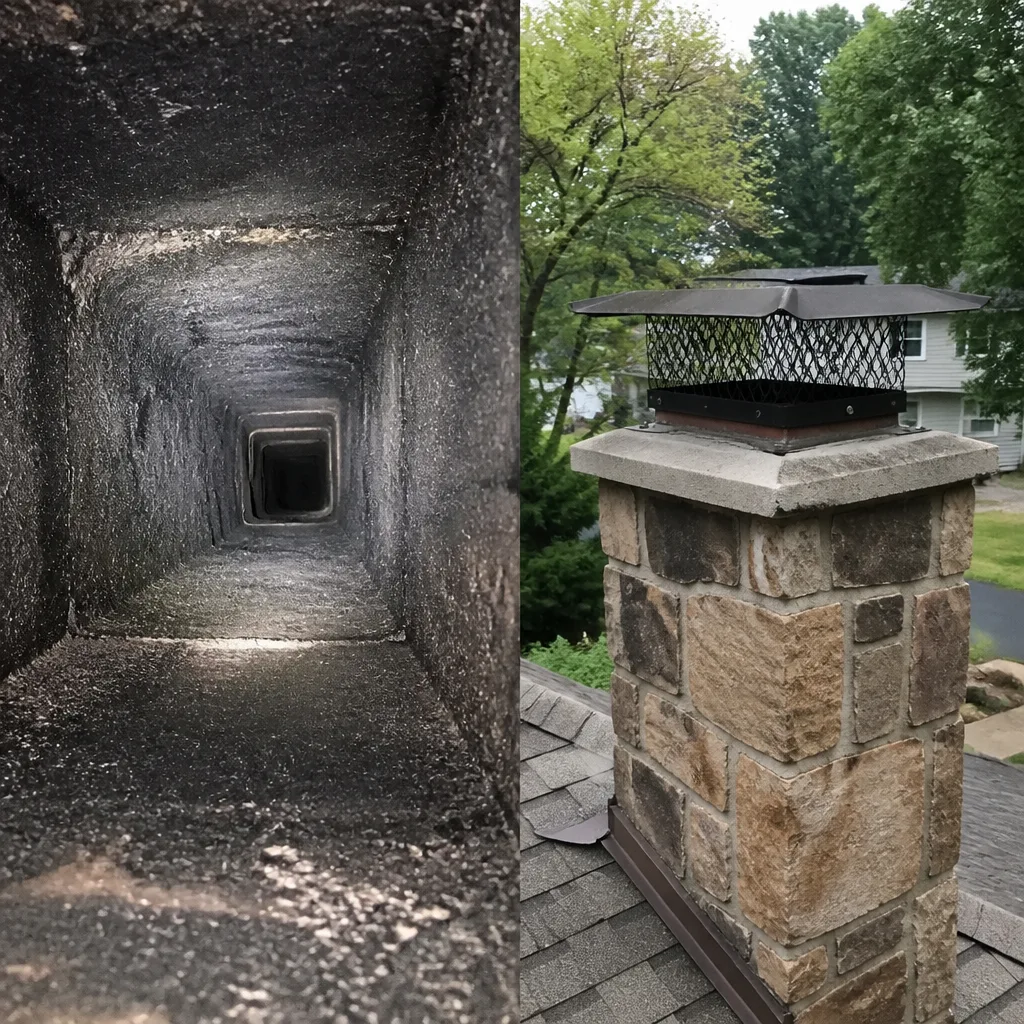 Sweep & inspection
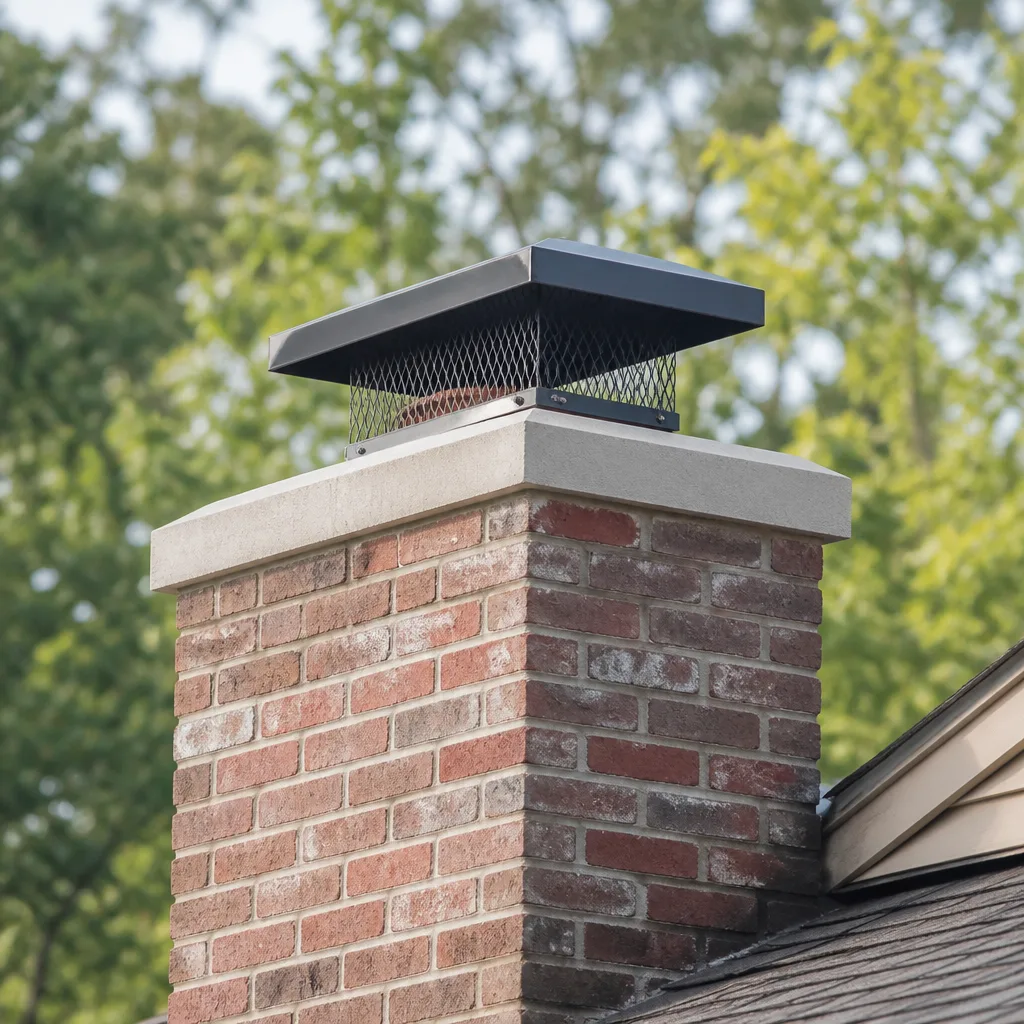 Caps & crowns
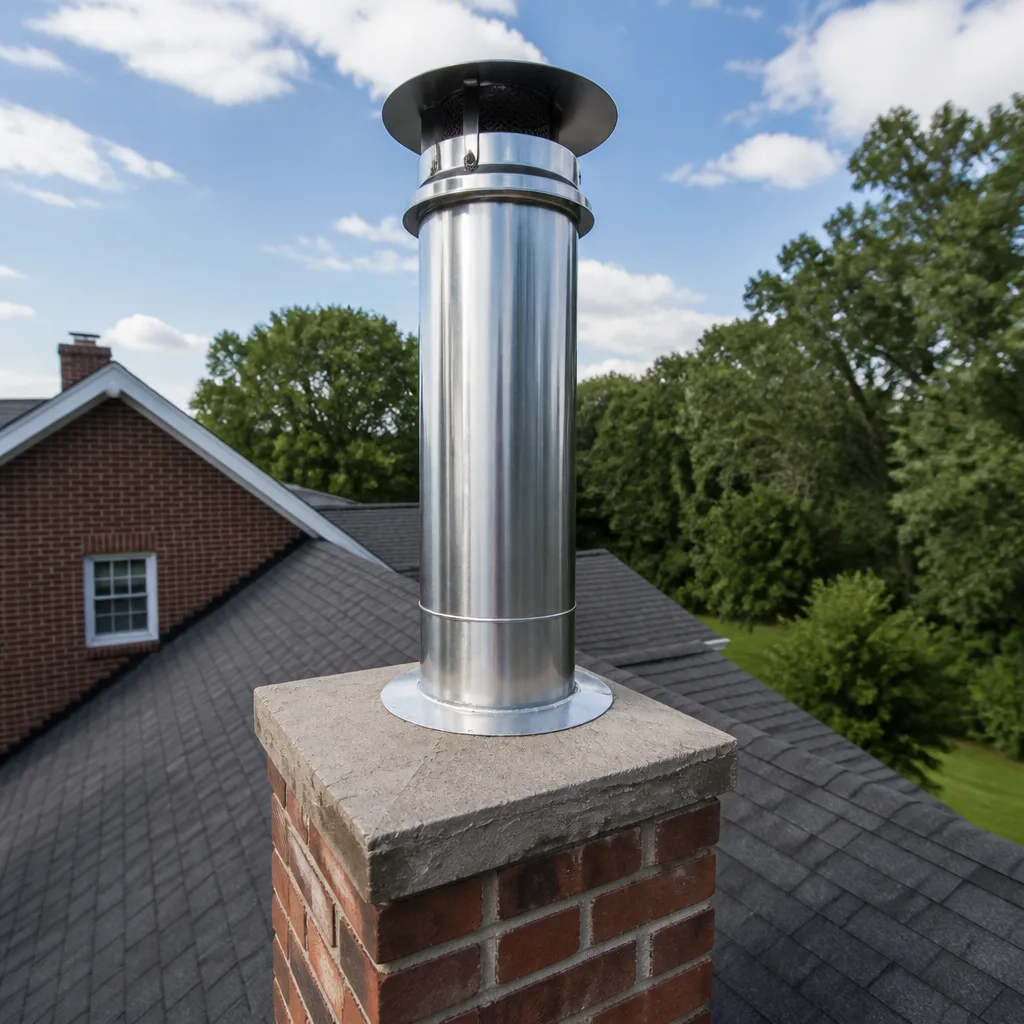 Flue relining
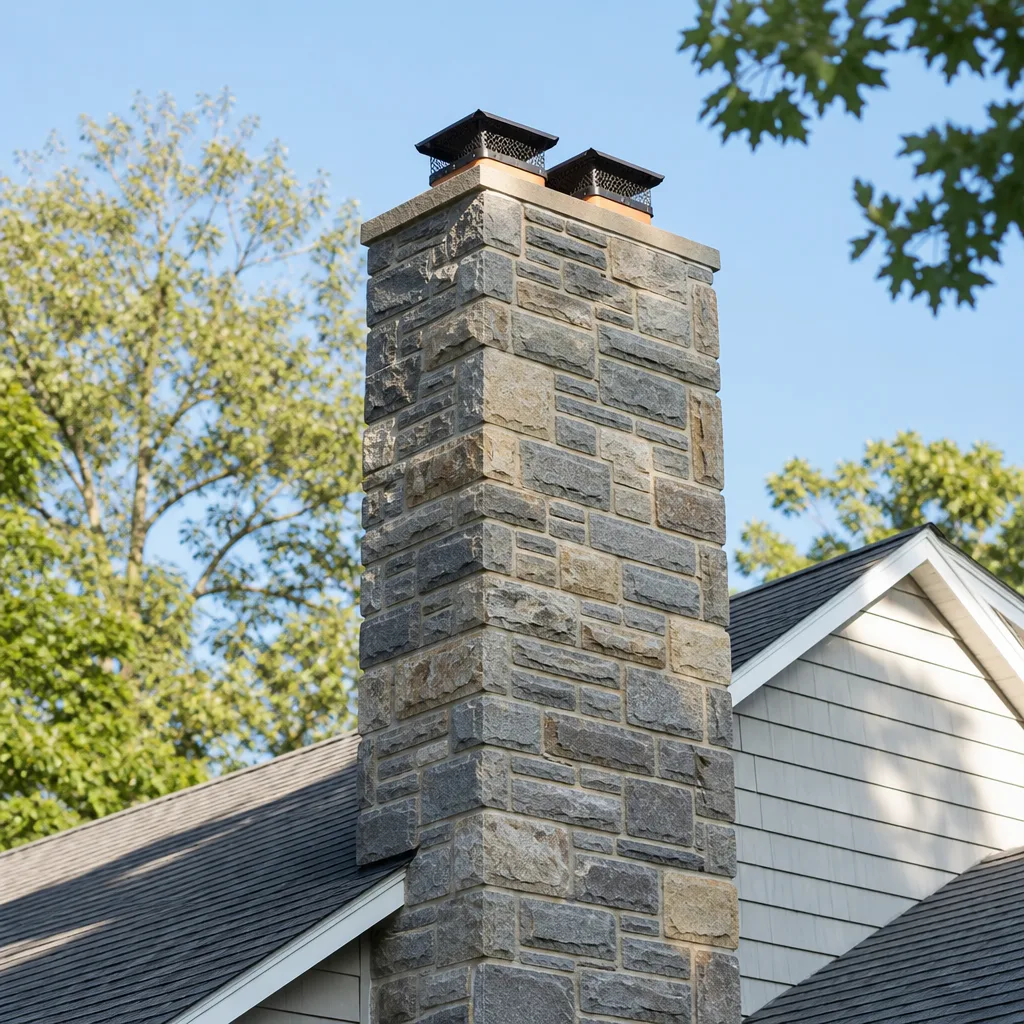 Masonry repair
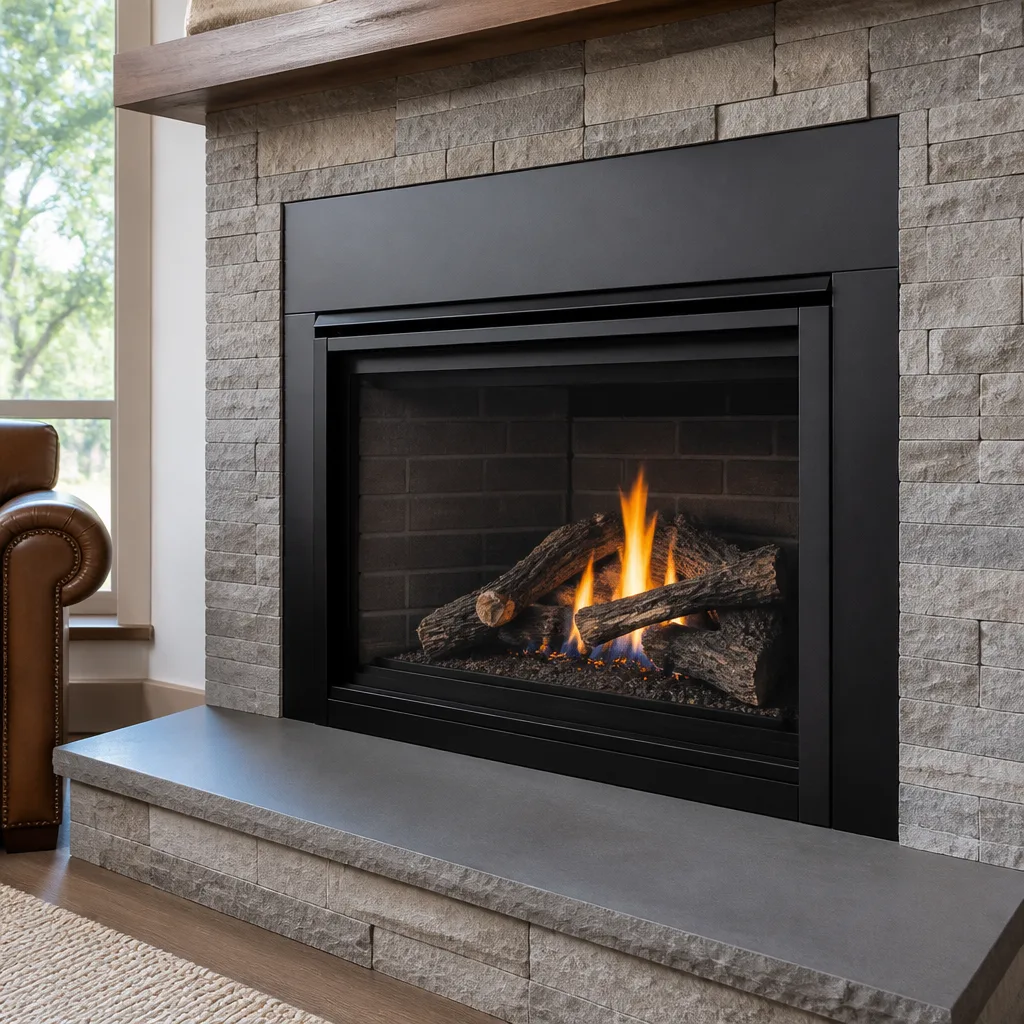 Gas fireplace service
Level 1 sweep and inspection to the NFPA 211 annual standard - flue, crown, cap, and flashing checked and photographed
Chimney sweep logs do not sweep chimneys. They loosen some creosote - which then falls where a brush and vacuum still have to collect it.
Chimney Sweep Troubleshooting in San Leandro: Common Problems and How to Fix Them
If your fireplace smokes back into the room only on windy days, that’s not a draft problem. It’s almost certainly a cap or crown issue, and sweeping alone won’t fix it. That distinction matters because most chimney advice starts and ends with “get it cleaned,” while the actual problem sits thirty feet above the firebox where nobody looks. This guide maps what you see and smell in your San Leandro living room to what’s physically happening inside the flue, so you can stop guessing, ask the right questions, and understand when a sweep is enough and when the chimney needs real repair.
Quick Answer
Most chimney problems in San Leandro fall into four categories: creosote buildup, water intrusion, drafting failure, and structural gaps in the liner, crown, or cap. A smoke smell during use usually means a draft or blockage problem; a stale creosote odor in summer usually means moisture or a liner gap. The fix depends on which symptom you’re seeing, but anything beyond a standard cleaning requires a repair-capable chimney company, not just a sweep with a brush.
Styles & brands we work with
- Sweep & inspection
- Caps & crowns
- Flue relining
- Masonry repair
- Gas fireplace service
Table of Contents
- Why Smoke Comes Back Into the Room
- Creosote Odor in Summer vs. Smoke Smell During Use
- What Staining Patterns on Masonry and Firebox Tell You
- Why a Clean Chimney Can Still Draft Poorly
- Liner Gaps, Crown Cracks, and Cap Problems: The Hidden Repairs
- Dryer Vent Symptoms That Overlap With Chimney Problems
- Step-by-Step Troubleshooting for San Leandro Homeowners
- Common Mistakes to Avoid
Why Smoke Comes Back Into the Room
Smoke in your face is the most alarming chimney symptom there is, but it’s also the most diagnostic. Where the smoke appears, when it appears, and what the weather is doing at that moment all point to different root causes. In San Leandro, where winters are mild and we rarely deal with extreme cold, the cause is almost never “the chimney is too cold to draft.” It’s usually physical: a blockage, a pressure problem inside the house, or a cap that’s doing the opposite of its job.
Here’s what the symptom is actually telling you:
- Smoke only on windy days: This points to the cap or crown. A wrong-size cap, a missing cap, or a cracked crown lets wind press down into the flue and reverse the draft. Cleaning won’t touch this.
- Smoke on startup, then it clears: The flue is cold or the damper is partially closed, but if it happens every time, you may have a flue that’s oversized for the fireplace opening, which affects draft velocity.
- Smoke whenever the furnace or water heater runs: This is negative pressure. Modern homes in San Leandro are tighter than older ones, and a running exhaust fan, furnace, or even a bathroom fan can pull air down the chimney instead of letting it rise.
- Smoke every time, regardless of weather: You likely have a blockage or severe creosote buildup narrowing the flue, or a damper that isn’t opening fully.
- Smoke smell in other rooms, not the living room: Air is being pulled through gaps in the chimney structure into wall cavities or upstairs rooms. This is a liner or mortar joint problem, not a draft problem.
When we troubleshoot smoke backdraft in San Leandro homes, we start at the top and work down. The cap gets inspected first because it’s the most common culprit and the cheapest to fix. Then the crown, then the flue interior, then the firebox and damper. A standard chimney sweep removes the creosote that could be narrowing the flue, but if the cap is the wrong size, the smoke keeps coming back until that changes.
Creosote Odor in Summer vs. Smoke Smell During Use
These are two different problems with two different fixes, and confusing them sends homeowners down the wrong path every time. A smoke smell while the fireplace is running is a draft or blockage issue. A creosote smell in August, when nothing has burned in weeks, is moisture and airflow through deposits already inside the flue.
Here’s the distinction that matters:
Smoke smell during use
This means combustion byproducts aren’t leaving the house. The cause is almost always one of the backdraft problems above: cap, crown, pressure, or blockage. The fix starts with identifying which one, not with burning hotter or opening a window.
Creosote odor in warm weather
Creosote is a tar-like byproduct of wood combustion that coats the flue interior. When humid air moves through the chimney in summer, or when rain gets past a damaged crown or cap, that moisture reactivates the creosote and makes the smell noticeable inside the house. The smell itself is a symptom of two things: creosote buildup that needs removal, and moisture intrusion that needs repair. Sweep first, then seal. If moisture keeps getting in, the odor returns after every sweep.
San Leandro’s cool, damp mornings and marine-influenced air make summer creosote odor more common here than in drier inland areas. The humidity doesn’t cause it alone; it reveals deposits that were already there. A thorough cleaning removes the source, and a same-visit inspection tells us whether the crown or cap needs attention to keep it from coming back.
What Staining Patterns on Masonry and Firebox Tell You
Water leaves marks, and those marks follow gravity. Reading them tells you where the water is entering, how long it’s been happening, and whether the chimney is actively deteriorating or just cosmetically stained. In San Leandro’s climate, we don’t worry about freeze-thaw damage, but persistent dampness still eats at mortar joints and rusts metal components over time.
Here’s what common patterns mean:
- White, chalky deposits on the exterior brick face: Efflorescence. Water is moving through the masonry and evaporating on the surface, leaving minerals behind. It’s a sign of absorption, not a structural crack, but it tells you the brick and mortar are taking on more water than they should.
- Dark staining running down from the crown: The crown is cracked or improperly sloped, and water is sheeting down the chimney body instead of off the edge. Over time, this weakens mortar joints and works into the flue.
- Rust-colored streaks from the cap or flashing: The metal components are corroding, which means water sits there regularly. This points to a cap that isn’t shedding water or flashing that has separated from the roofline.
- Staining on the firebox floor or walls after rain: Water is coming down the flue directly. This usually means a damaged crown, a missing or wrong-size cap, or a cracked flue liner letting rain run inside.
- Damp smell in the firebox with no visible water: Moisture is trapped in the masonry or in creosote deposits. The flue needs inspection, not just airing out.
We’ve seen fireboxes in San Leandro with years of staining that turned out to be a single cracked crown tile letting a trickle of water down one side of the flue. The fix was straightforward once we could see it, but it required someone who works on chimneys beyond sweeping. A brush doesn’t repair a crown.
Why a Clean Chimney Can Still Draft Poorly
This is the one that frustrates homeowners the most. They paid for a sweep, the flue is spotless, and the fireplace still smokes. The problem isn’t dirt; it’s geometry or structure. A clean chimney can draft terribly for reasons that have nothing to do with creosote.
- Wrong-size cap: A cap too small creates turbulence at the top, while a cap too large can restrict airflow. Either way, the draft suffers.
- Flue too tall or too short relative to the roofline: Code requires the chimney to extend a certain height above the roof. If it doesn’t, wind patterns around the house can push smoke back down.
- Oversized flue for the fireplace opening: When the flue is proportionally too large, the smoke doesn’t have enough velocity to rise effectively. This is common in older San Leandro homes where a fireplace was rebuilt or a liner was replaced with the wrong size at some point.
- Liner gaps or deteriorated mortar joints: Air leaks into the flue through gaps, cooling the smoke and slowing the draft. Deteriorated joints are a repair issue, not a cleaning issue.
- Internal house pressure: In a well-sealed home, running the kitchen exhaust hood, clothes dryer, or furnace can create enough negative pressure to overcome the chimney’s natural draft. The chimney is fine; the house is fighting it.
- Crown cracks: A cracked crown doesn’t just leak water. It also lets air pressure disrupt the draft by admitting wind into the top of the chimney chase.
When a homeowner in San Leandro tells us they’ve had the chimney cleaned recently but it still smokes, we don’t reach for the brush again. We start looking at the cap, the crown, the flue sizing, and the house’s pressure dynamics. A chimney sweep that only sweeps will miss every one of these, because none of them involve creosote.
Liner Gaps, Crown Cracks, and Cap Problems: The Hidden Repairs
This is where troubleshooting crosses from maintenance into repair territory, and where a sweep-only company has to stop. A chimney liner is the smooth passage inside the flue that carries smoke and gasses up and out. Gaps in it, cracks in the crown above it, or a failed cap at the top all create problems that are invisible from the living room and only visible with a camera inspection of the flue interior.
Liner gaps form over time as the mortar joints between clay tiles deteriorate. Heat, moisture, and age all take their toll. Once a gap opens, three things happen: combustion gasses can leak into the house structure, moisture gets into the masonry around the flue, and the draft weakens because air enters through the gap. None of these show up as visible creosote. They show up as smells, drafts, and carbon monoxide risk.
The fix depends on the severity. For minor gaps and cracked tiles, we use HeatShield, a cerfier-applied resurfacing material that seals the flue interior without full replacement. For liners that have deteriorated beyond resurfacing, we install a new stainless liner using DuraFlex, which is the same product specified by certified chimney professionals nationwide. The difference matters: resurfacing preserves the existing structure when it’s still sound; replacement handles it when it isn’t.
The crown and cap work together to keep weather out. A cracked crown lets water and air pressure into the chimney chase. A wrong-size or missing cap lets rain fall straight into the flue. We install Copperfield caps and repair or rebuild crowns so the top of the chimney does its job. If the cap was the source of a smoke backdraft, no amount of sweeping below will matter until the top is corrected.
This is what “we repair what we find” means in practice. When our technicians in San Leandro find a liner gap during a routine sweep, they can address it on the same visit or schedule the repair with a proper plan, instead of sending you on a hunt for a second company that does structural work.
Dryer Vent Symptoms That Overlap With Chimney Problems
Dryer vents and chimneys are separate systems, but they fail in similar ways and get ignored for the same reason: nobody sees them until something goes wrong. A dryer vent that’s packed with lint behaves like a blocked flue. The dryer runs longer, clothes come out damp, the laundry room gets warm and humid, and in worse cases, you smell something faintly electrical or musty.
The distinction matters because dryer vent cleaning is a separate service with its own risks. A blocked dryer vent is one of the most common causes of residential structure fires, and the blockage builds slowly over months of normal use. The symptom that usually gets attention is the dryer running a full cycle and the clothes still being damp. What’s actually happening is that the moist air has nowhere to go, so the dryer’s efficiency collapses and the vent interior stays wet.
We use Famco venting products when we replace or repair dryer vent components, the same commercial-grade standard used in multi-unit buildings. It matters because a dryer vent repair that uses cheap foil or plastic flex fails early and can trap lint in sagging bends. The standard matters for fire safety, not just efficiency.
If your dryer vent hasn’t been cleaned in years but your chimney has been swept regularly, you’ve got a fire risk hiding behind the laundry room wall. It’s worth a look on the same visit, because we’re already at the house and the inspection is fast.
Step-by-Step Troubleshooting for San Leandro Homeowners
Before you call a chimney company, here’s a practical sequence to work through. It won’t give you a perfect diagnosis, but it will narrow the field and help you describe the problem accurately. That matters for a good outcome.
- Identify the main symptom. Is it smoke in the room, a smell when nothing’s burning, water staining, or poor performance? Each symptom routes to a different set of causes.
- Note the conditions. Does the smoke only happen on windy days? Only when the furnace runs? Only in summer? The conditions are diagnostic.
- Look at the obvious external factors. Check whether the damper opens fully. Look up at the cap with binoculars: is there one at all? Is it rusted or clearly tilted?
- Check for pressure conflicts. If the smoke gets worse when other appliances run, close windows and test whether the problem persists. In a tight San Leandro house, a fresh-air source may correct a pressure-driven backdraft.
- Call someone who can inspect the flue interior. A camera inspection is the only way to see liner gaps, hidden blockages, or creosote buildup in the upper third of the flue that isn’t visible from below.
- Get the repair and the sweep handled together. If the camera finds a liner gap, cap problem, or crown crack, the same company should be able to fix it. Otherwise you’re paying for a diagnosis and then a second diagnosis from a repair contractor.
This process works because it separates symptoms from guesses. Most chimney problems in San Leandro are diagnosable with a camera inspection and an honest reading of the conditions. The repair is usually straightforward once you actually see what’s going on inside the flue.
Common Mistakes to Avoid
- Treating every chimney problem as a creosote problem. Creosote causes some problems, but cap failures, crown cracks, liner gaps, and pressure issues cause just as many, and sweeping does nothing for them. If you swept and the problem came back, the sweep wasn’t the issue.
- Burning a “cleaning log” and calling it done. A cleaning log might loosen light soot, but it doesn’t remove creosote deposits, doesn’t inspect the liner, and doesn’t address structural problems. It’s not a substitute for a sweep.
- Ignoring summer creosote odor. If the chimney smells when it hasn’t been used, moisture is getting in, and that moisture is damaging the flue over time. Waiting until fall means a bigger repair.
- Having a sweep done without asking whether the company repairs what it finds. A sweep-only company can clean the flue and hand you a list of problems for someone else to fix. You want one company that can do both, which is the whole point of choosing a repair-capable chimney service in the first place.
- Replacing a cap with whatever’s on sale. Cap sizing and draft are directly connected. The wrong cap can make smoke backdrafts worse, and an undersized cap on a wide flue can create turbulence that pushes smoke back down.
- Ignoring dryer vent symptoms because “it’s just lint.” Lint buildup is a fire hazard with the same mechanism as a blocked flue: airflow stops and heat accumulates. A dryer vent that hasn’t been cleaned in years is a genuinely dangerous condition, not a household chore you got behind on.
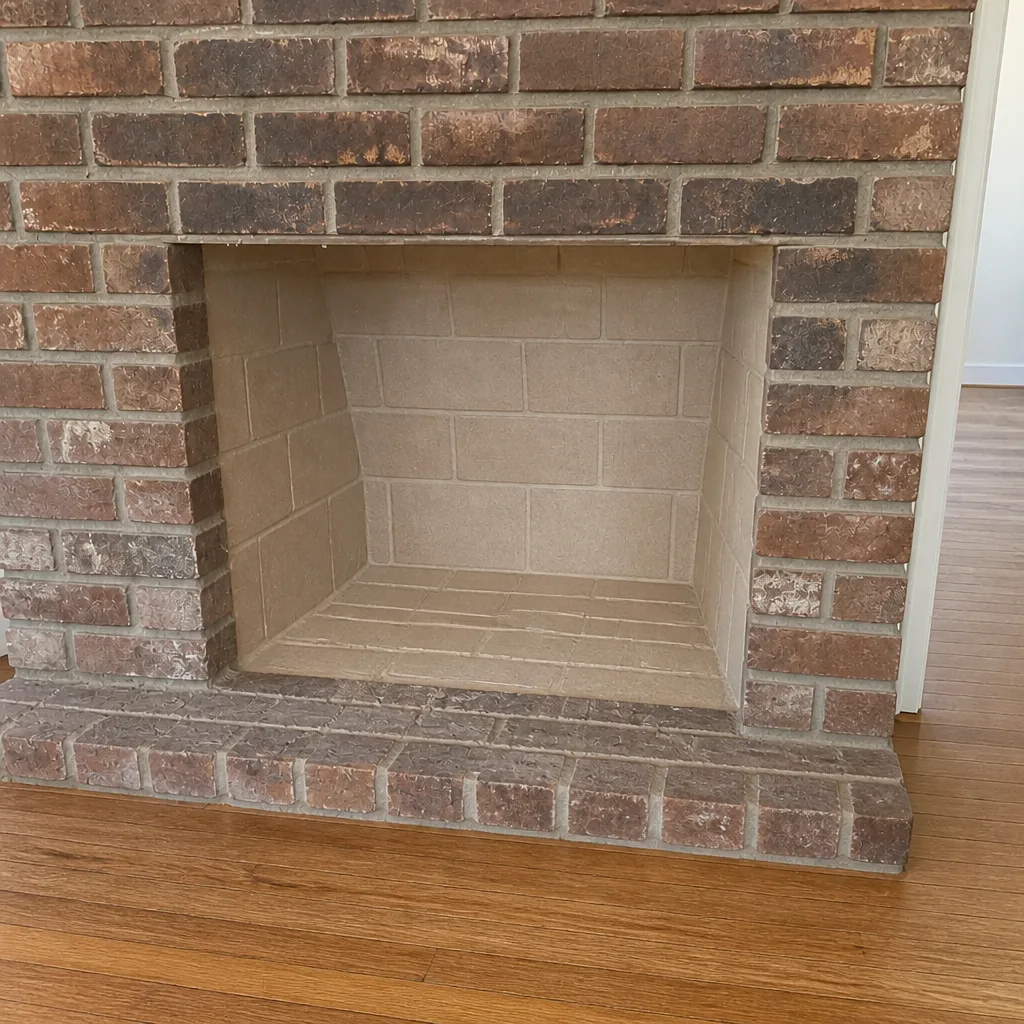
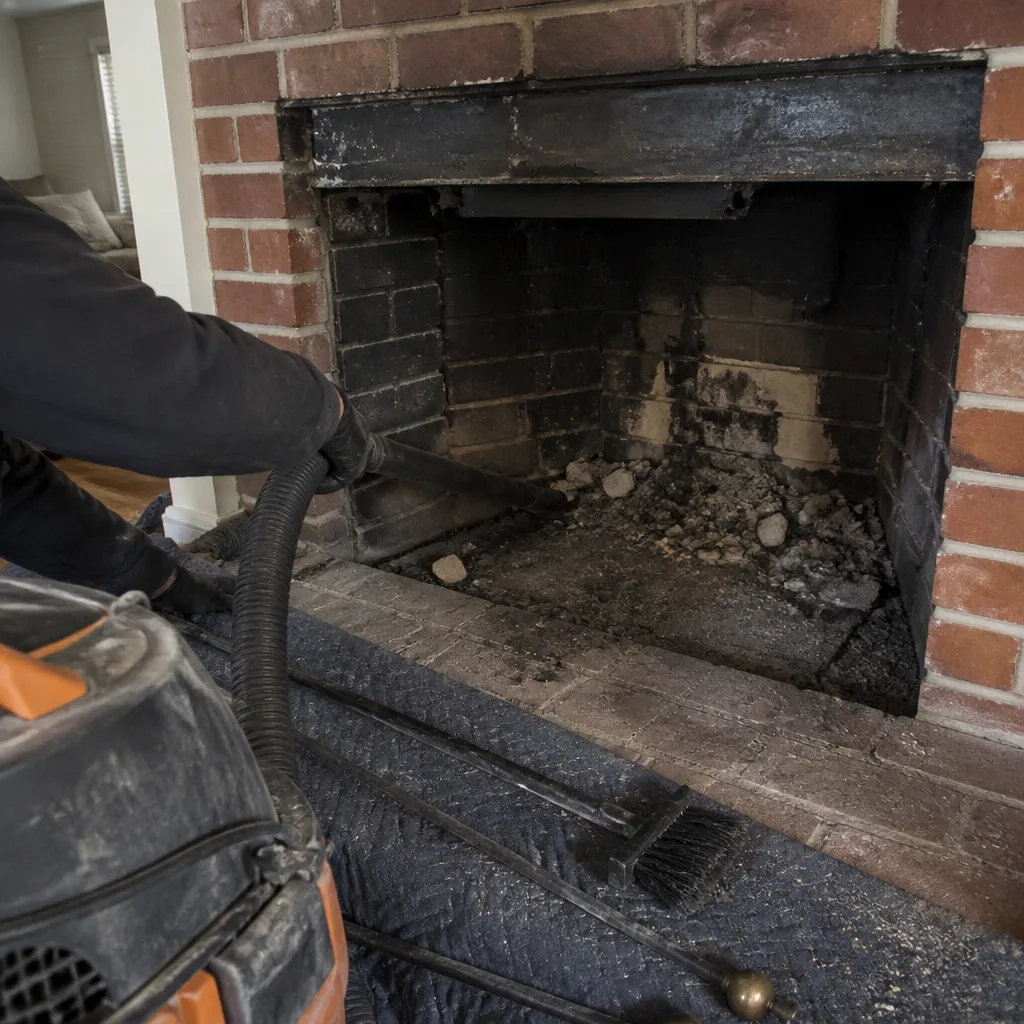
See the difference
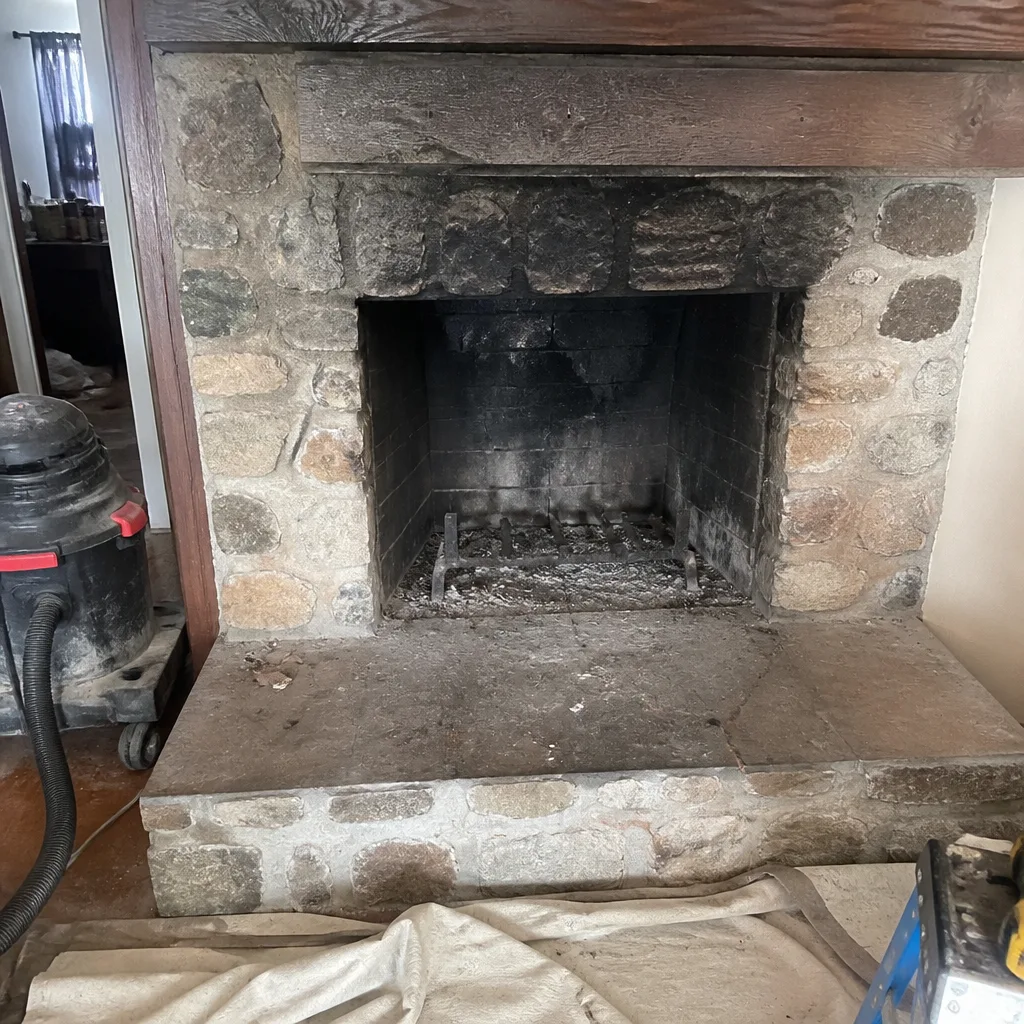 Before
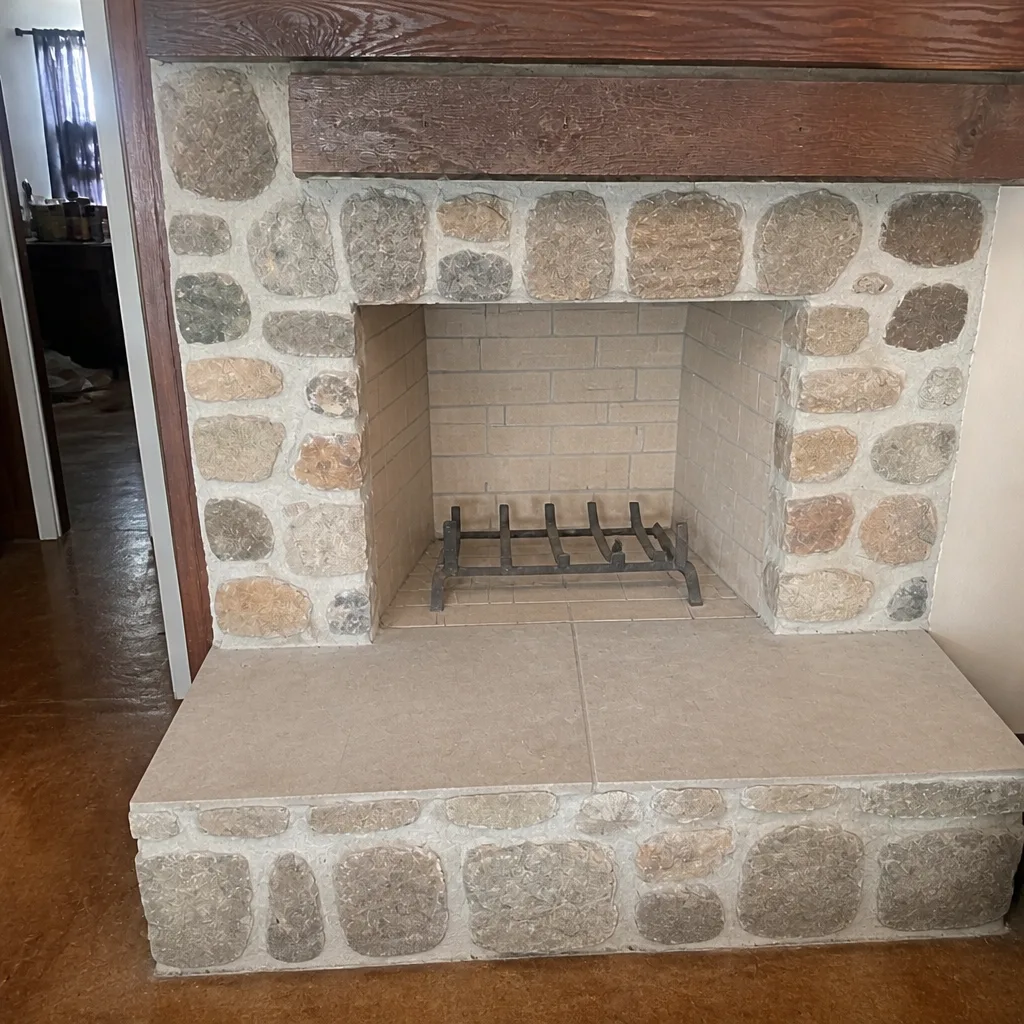 After
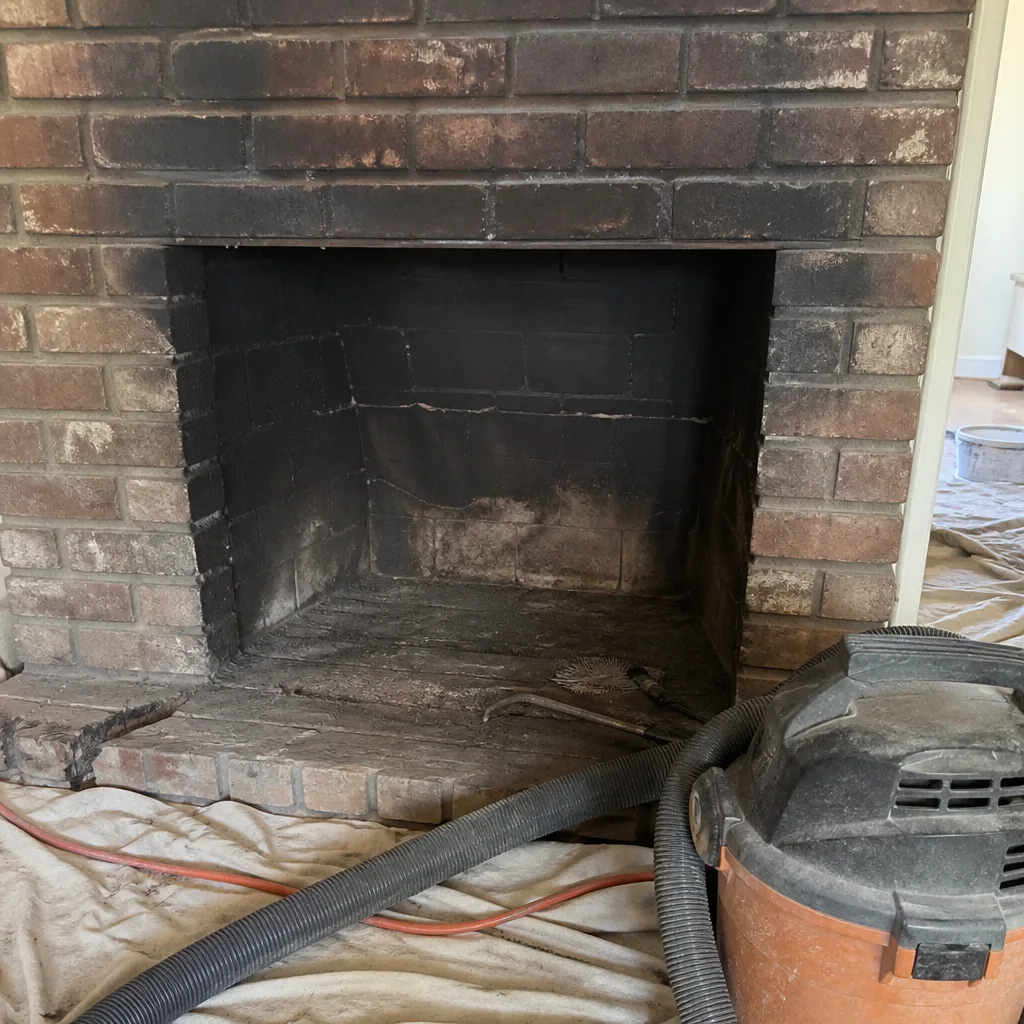 Before
 After
 Before
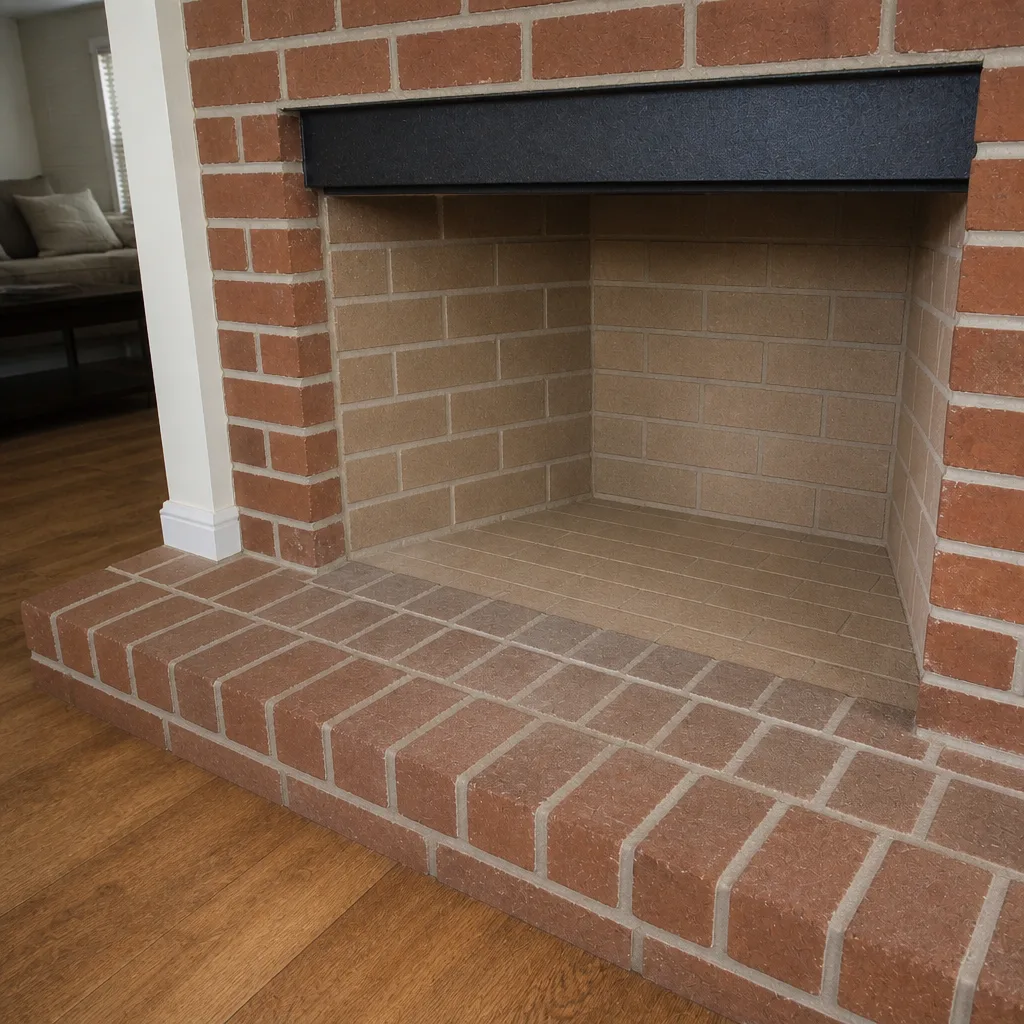 After
When to Call a Professional
Call when the symptom points to the flue interior, and you can’t see what’s happening from the firebox. That means smoke backdrafts that persist after a cleaning, creosote odor in summer, any water staining near the chimney, or a dryer vent that hasn’t been cleaned in more than two years. A camera inspection is the minimum standard for these situations, and a company that can repair what it finds saves you a second call and a second diagnosis. Chimney Cleaning San Leandro offers free estimates in San Leandro and Chimney Cleaning San Leandro handles the full system from liner to cap. Call (833) 736-8208. We answer 24/7. Fast dispatch from 7am to 7pm, Sunday through Friday.
Frequently Asked Questions
Wind-driven smoke backdraft is almost always a cap or crown problem. A missing, wrong-size, or damaged cap lets wind press down into the flue and reverse the draft, while a cracked crown lets air pressure enter the chase. It’s not a creosote issue; sweeping won’t fix it. Call (833) 736-8208 and we’ll inspect the top of the chimney first.
A standard chimney sweep in San Leandro typically runs a few hundred dollars depending on the condition of the flue, the height of the chimney, and whether a camera inspection is included. The estimate is free and the written estimate sets the final price. Call (833) 736-8208 for an exact quote based on your chimney.
Summer chimney odor is caused by moisture reactivating creosote deposits inside the flue. The odor itself points to two problems: creosote buildup that needs removal, and water intrusion through a damaged cap or crown that will keep the smell coming back until it’s fixed. Sweep first, then seal.
You might not. Minor liner gaps and cracked tiles can often be sealed with HeatShield, a resurfacing material applied inside the flue that extends liner life without full replacement. If the liner has deteriorated beyond that, a DuraFlex stainless liner is the replacement standard. The right answer depends on what the camera inspection shows.
If you burn regularly through the winter, once a year is the standard. If you use the fireplace occasionally, every other year may be enough, but the only way to know is to look inside the flue. Creosote buildup depends on what you burn, how hot you burn it, and how often.
Yes. A dryer vent that’s partially blocked won’t always fail obviously; it just runs longer, stays damp, and builds more lint in the process. The blockage is the fire hazard, not the dryer performance. If you can’t remember the last time the vent was cleaned, it’s overdue. Call (833) 736-8208 and we’ll combine it with a chimney sweep if needed.
The Bottom Line
Chimney troubleshooting only works when you treat symptoms as clues rather than inconveniences. Smoke on windy days points to the cap. Summer odor points to moisture. Water staining points to the crown or flashing. Draft problems after a clean sweep point to geometry or pressure, not creosote. Fixing each one means looking inside the flue and at the top of the chimney, not just running a brush through it. A repair-capable chimney company does both, which is the difference between a symptom that goes away and a symptom that keeps coming back. If you’re in San Leandro, start with a free estimate and a camera inspection. Call (833) 736-8208. We answer 24/7. Fast dispatch from 7am to 7pm, Sunday through Friday.
Written by the team at Chimney Cleaning San Leandro, serving San Leandro since 2013.